
Empire Of The Seas
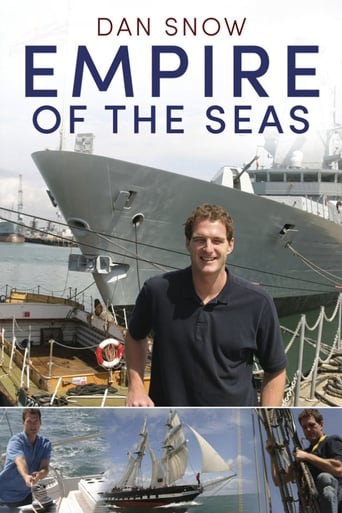
Historian Dan Snow charts the defining role the Royal Navy played in Britain's struggle for modernity - a grand tale of the twists and turns which thrust the people of the British Isles into an indelible relationship with the sea and ships.
Seasons
Episodes
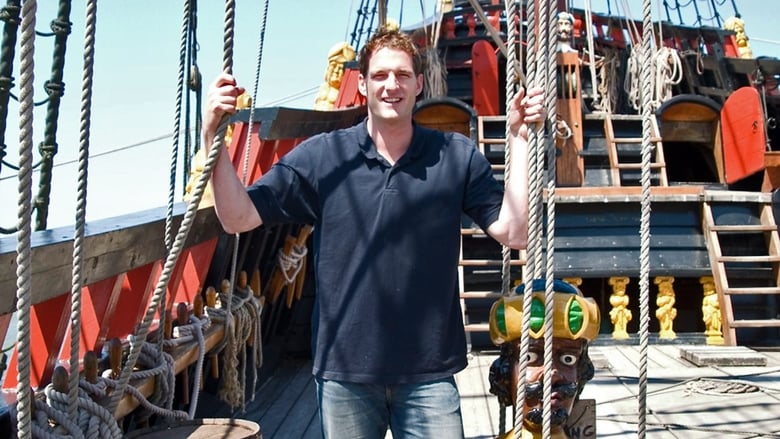
Heart of Oak opens with a dramatic retelling of 16th and 17th-century history. Victory over the Armada proved a turning point in the nation's story as tiny, impoverished England was transformed into a seafaring nation, one whose future wealth and power lay on the oceans. The ruthless exploits of Elizabethan seafaring heroes like Francis Drake created a potent new sense of national identity that combined patriotism and Protestantism with private profiteering. At sea and on land, Snow shows how the Navy became an indispensable tool of state, weaving the stories of characters like Drake, God's Republican warrior at sea Robert Blake, and Samuel Pepys, administrator par excellence, who laid the foundations for Britain's modern civil service. With access to the modern Navy and reconstructed ships of the time, Snow recounts the Navy's metamorphosis from a rabble of West Country freebooters to possibly the most complex industrial enterprise on earth.
Historian and sailor Dan Snow presents the second episode in this four-part series examining the remarkable story of how the country's greatest institution - her Navy - has shaped her history. In The Golden Ocean, Snow charts the period from 1690 to 1759 and reveals how England - soon to be Britain - and her Navy rose from the depths of military and economic disaster to achieve global supremacy. In 1690, France ruled the waves and the Royal Navy was in tatters. King William III had taken England into a disastrous war against the most powerful country in Europe. If England was to survive, it needed a new Navy, one capable of carrying the fight to its enemies anywhere in the world. To achieve this would require a national effort unlike anything that had been seen before. King William III's determination to achieve mastery of the seas unleashed a chain reaction of revolutions in finance, industry and agriculture which reshaped the landscape and created the country's first great credit boom. Fifty years before the Industrial Revolution, the Royal Navy became the engine of global change, propelling Britain into the modern world. It had the desired effect at sea. By 1759, French forces around the world were capitulating to Britain's superior Navy. For the first time in her history, Britannia really did rule the waves.
Dan Snow examines the growth of Britain's empire in the late 18th century, when the Navy's relationship with the pre-eminent scientific institution, the Royal Society, led to the exploration of the Pacific and the discovery of Australia. But with the threat of an attack by a resurgent France imminent, Whitehall was forced to introduce income tax to improve the ships, and in a conflict that resulted in the death of Admiral Nelson, the country's fleet defeated the French and Spanish at the Battle of Trafalgar in 1805
Dan Snow explores how Britain emerged as the global superpower during the 19th century, building on Nelson's triumph at the Battle of Trafalgar. By 1848, the country enjoyed relative peace due to naval domination, but the growing threat posed by Germany led to Admiral `Jackie' Fisher introducing plans to modernize the force by building battleships like the Dreadnought. An arms race between the two countries ensued, which led to the 1916 conflict at Jutland in World War One, considered a strategic victory for the Allies. Last in the series
More Like This
TV shows with a similar genre, style and mood

An Idiot Abroad

Rhod Gilbert's Work Experience

The Café

Life's Too Short

Monty Python: Almost the Truth (The Lawyer's Cut)

Fred Dinenage - Murder Casebook

The Undateables

Cuckoo

Egypt Unwrapped

A History of Art in Three Colours

Brazil with Michael Palin

The Supersizers...
FILMARNIK does not host any video files. All content is provided by third-party sources.